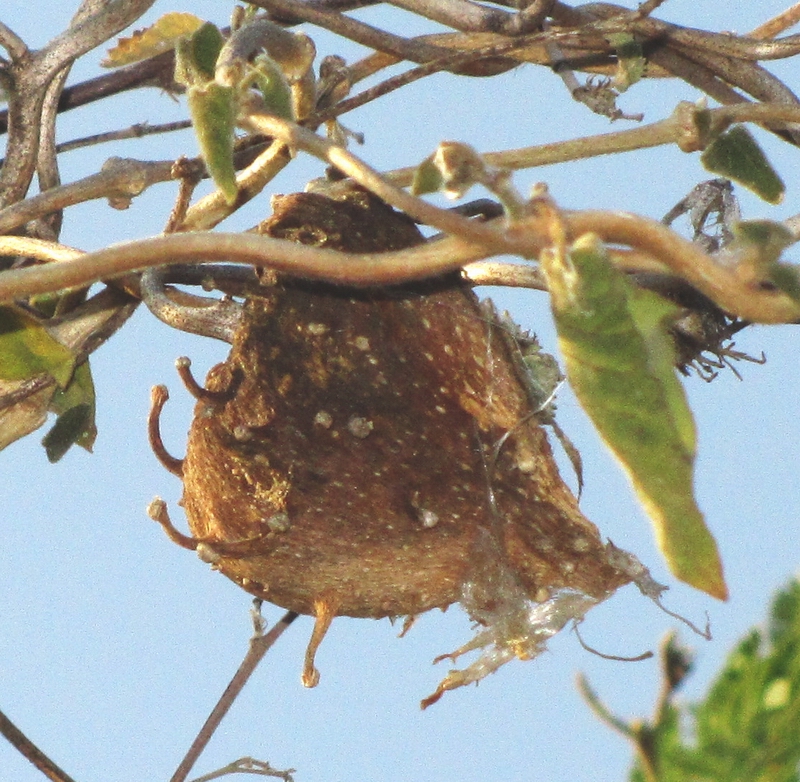
This is a very poisonous plant, tree.
More dangerous than the common Manzanilla trees along the coast.
So, be careful!
Zeer vergiftig. Niet aanraken. Blad en vrucht.
Habitat and biodiversity of Curaçao. Plants, flowers, trees, wildlife, wildflowers, birds, insects, mammals and more. All photos are copyright protected
Pagina's
- Welcome at Hiking Curaçao!
- Hiking Curaçao: Flora and Fauna
- Hiking Curaçao: The Trails
- Hiking Curaçao: Tips and Info
- 1. BiRDS
- 2. INSECTS, SPIDERS
- 3. REPTILES, FROGS, LIZARDS
- 4. MAMMALS
- 5. FISH
- 6. CRABS
- 7. SHELLS, SNAILS
- 8. FOSSILS
- A. FLOWERS, BUSHES
- B. TREES
- C. CACTI, SEMI-CACTI
- D. MUSHROOMS, FUNGI
- H. MISCELLANEOUS, THIS and THAT
Posts tonen met het label plant. Alle posts tonen
Agave, Century plant. Many visitors
Besides birds, the Agave attracts bees, butterflies and other insects. The Oriole seems to hunt the insects. Other birds come for the flowers.
The blooming of the Century plant starts from below. It takes about two to three weeks to get to a flowering top.
Agave
Bananaquit
Oriole
Hummingbird
Warblers and Mockingbirds are also interested in the plant.
Labels:
1,
A,
Agave,
bananaquit,
Bird,
century,
hummingbird,
mockingbird,
oriole,
plant,
warbler,
yellow
Curaçao
Curaçao
Wilde Salie - Jerba di Sali - Wild Sage - Croton Flaves
The wild sage is a plant that we often find along the trails. It grows on roadsides as well in gardens that were once better kept.
In old times its leaves were used for medicine.
Curaçao
Curaçao
Stakamahachi
Labels:
A,
B,
berry,
fruit,
plant,
Rivina humulis,
shrub,
small,
Stakamahachi
Curaçao
Curaçao
Red Berry
Seed / berry of a plant that we saw along the trail to Boca Sal (Bandabou).
We don't know what is is. But beauty it has!
Curaçao
Curaçao
A little warning about a common house plant
"With common names like Mother-in-Law’s Tongue and Dumbcane, you can be sure that this plant has an interesting story associated with it. A popular houseplant for over 150 years, the Dumbcane is native to South America where it is commonly found growing in tropical jungles, especially in Brazil. As members of the Arum family of plants (Araceae), all 30 members of the genus Diffenbachia, including the Dumbcane, count as close relatives such well-known plants as Philodendron, Pothos, Calla, Anthurium, Spathiphyllum, and Skunk Cabbage. The relationship between Dumbcane and Skunk Cabbage becomes very obvious when either plant is bruised. They both emit a skunk-like odor.
----
Undoubtedly the most intriguing characteristic of the Dumbcane relates to its common names. It has been known for over a century that the plant contains crystals of calcium oxalate, and if any part of it is eaten a sudden burning irritation and paralysis of the mouth, tongue, and lips will result. This usually prevents a person from talking for a while, which has led to the amusing common names. The ingestion of this plant, however, can have some serious consequences such as vomiting, diarrhea, and intense salivation. Death has been reported to occur when tissues at the back of the tongue and throat swell and block air passage."
Read More here!
And do not forget! The Manzanilla Apple is very poisonsous! Do not touch the apple or the leaves. Do not stand under the tree when it is raining or still dripping from a rainfall.
The apple and leave.
A Manzanilla Forest (Ascencion).
Abonneren op:
Posts (Atom)